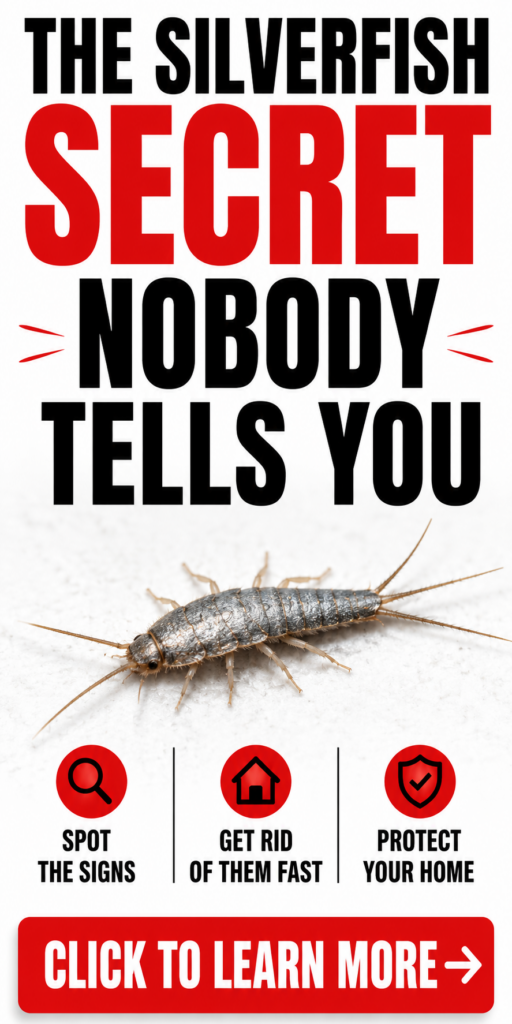
Silverfish are fast, flat, wingless insects with a distinctive silvery appearance and three tail-like filaments. They are especially common in damp, dark areas such as bathrooms, basements, laundry rooms, closets, attics, and storage spaces.
If you have ever turned on the bathroom light at night and seen a tiny silver insect disappear under the baseboard, you may have silverfish.
The good news? Seeing one silverfish does not automatically mean your home is seriously infested. There are several simple things you can do to make your home much less attractive to them.
What Are Silverfish?
Silverfish are small household insects that are usually active at night. They have elongated, carrot-shaped bodies, long antennae, and three tail-like appendages at the rear.
They are excellent runners and tend to hide during the day, which is why you may suddenly notice one crawling across your bathroom floor at night.
Silverfish feed on a variety of materials, including starches, carbohydrates, paper products, glue, cardboard, fabrics, dust, and dead insects. Books, old newspapers, cardboard boxes, and stored fabrics can therefore provide both food and shelter.
Why Do You Have Silverfish in Your House?
The biggest factor is usually moisture.
Silverfish prefer humid environments and are commonly found in areas where excess moisture is present. Leaking pipes, condensation, poor ventilation, damp basements, and humid bathrooms can all create favorable conditions.
They can also enter or spread through tiny cracks, gaps around pipes, wall voids, and other concealed spaces.
So if you keep killing silverfish but they keep returning, spraying the insects may not solve the actual problem. You need to make the environment less attractive to them.
9 Ways to Get Rid of Silverfish
1. Reduce Humidity
This is one of the most important steps.
Use a dehumidifier in damp basements, bathrooms, laundry rooms, garages, or other humid areas. Improving ventilation can also help reduce moisture.
Pay particular attention to rooms where you frequently see silverfish. If the bathroom stays humid for hours after a shower, run the exhaust fan and improve airflow whenever possible.
The goal isn’t simply to kill the silverfish. It’s to remove the conditions that allow them to thrive.
2. Fix Leaks and Moisture Problems
Check underneath sinks, around toilets, near washing machines, around pipes, and anywhere you notice condensation or dampness.
Even a small plumbing leak can create a consistently humid hiding place. Repair leaking pipes and dripping faucets, and address water entering from roofs, windows, foundations, or other parts of the building.
3. Get Rid of Cardboard Clutter
Old cardboard boxes are excellent hiding places for silverfish.
If you have boxes sitting in a basement, closet, garage, or attic for years, inspect them carefully. Consider replacing long-term cardboard storage with sealed plastic containers.
This reduces both hiding places and potential food sources.
4. Protect Books and Paper
Silverfish can feed on materials containing starch and may damage books, wallpaper, paper products, and bookbinding adhesives.
If you store valuable books, documents, magazines, or photographs, keep them in clean, dry conditions. Avoid placing large collections directly against damp walls or in humid basements.
For long-term storage, airtight containers can provide additional protection.
5. Vacuum Regularly
Regular cleaning can remove crumbs, dust, dead insects, and other potential food sources.
- Baseboards
- Corners
- Under furniture
- Behind appliances
- Closets
- Bathroom edges
- Basement floors
- Areas around pipes
Vacuuming can also remove silverfish and their hiding places before the population grows.
6. Seal Cracks and Gaps
Silverfish can move through surprisingly small openings.
Inspect areas around pipes, windows, doors, baseboards, wall penetrations, electrical or cable openings, and cracks in floors and walls. Use appropriate caulk or sealant to close gaps.
7. Store Dry Foods in Airtight Containers
Silverfish aren’t limited to paper and cardboard. They can also feed on various dry food materials, including flour, cereals, pasta, and pet food.
Instead of leaving dry foods in opened cardboard or paper packaging, store them in containers with tight-fitting lids. This is especially useful in kitchens and pantries.
8. Try Simple Traps
If you want to monitor whether silverfish are still active, sticky insect traps can help identify areas where they are most common.
Another simple method is a glass-jar trap with masking tape wrapped around the outside. The rough tape gives the insects a way to climb up the jar, while the smooth glass makes it difficult for them to climb back out.
Place traps along walls, in corners, closets, or other areas where you have noticed activity.
9. Use Insecticides Only When Necessary
An occasional silverfish usually doesn’t require chemical treatment.
If you have a persistent or significant infestation, targeted insecticide treatment may be appropriate. Products should specifically be labeled for silverfish or the relevant pest, and the label directions should always be followed.
Importantly, insecticides shouldn’t replace moisture control. If the underlying humidity, food sources, and hiding places remain, silverfish may continue to return.
What Attracts Silverfish?
Silverfish are particularly attracted to environments that provide a combination of moisture, food, and shelter.
- High humidity
- Damp bathrooms
- Wet basements
- Leaking plumbing
- Poor ventilation
- Cardboard boxes
- Old newspapers and magazines
- Books and paper
- Dust and debris
- Stored fabrics
- Cracks and wall voids
Are Silverfish Dangerous?
For most homeowners, silverfish are primarily a nuisance and property-damage pest, rather than a dangerous insect.
They don’t have wings and are not known for biting people. The bigger concern is what they can damage.
Large populations may feed on paper products, book materials, wallpaper, cardboard, and certain fabrics.
Silverfish vs. Firebrats: What’s the Difference?
Silverfish are sometimes confused with firebrats because they look similar.
The easiest difference is their preferred environment. Silverfish generally prefer cooler, humid locations such as basements, bathrooms, closets, and other damp areas. Firebrats prefer much warmer environments and are often found around furnaces, boilers, hot pipes, and heating equipment.
Correct identification can help you determine where to look for the source of the problem.
How to Prevent Silverfish From Coming Back
Once you get rid of the immediate problem, prevention becomes much easier.
Keep your home dry: Control humidity and repair leaks.
Keep it clean: Vacuum dust, crumbs, and debris regularly.
Stay organized: Reduce piles of cardboard, paper, and unused items.
Seal openings: Close cracks and gaps around pipes, doors, windows, and baseboards.
Protect stored items: Store important documents, books, fabrics, and dry foods appropriately.
These steps work together. Cleaning alone may not eliminate an established infestation, just as spraying alone may not solve the underlying moisture problem.
When Should You Call a Pest Professional?
If you occasionally see a single silverfish, start by reducing moisture, cleaning the area, removing clutter, and sealing obvious gaps.
However, consider professional pest control if:
- You see silverfish regularly
- You find them in several rooms
- You discover damage to books or stored materials
- You cannot locate the source
- Numbers continue increasing despite moisture control
- You suspect they are living inside walls or other inaccessible areas
Large or persistent infestations can be difficult to locate and control because silverfish can hide in protected spaces and move between areas of a building.
The Bottom Line
If you’re wondering how to get rid of silverfish, don’t focus only on killing the insects you see.
Start with moisture.
Dry out damp rooms, fix leaks, improve ventilation, remove cardboard and clutter, vacuum regularly, protect stored food and paper, and seal cracks where silverfish can hide.
For a small problem, these environmental changes may be enough to dramatically reduce activity.
And if silverfish keep appearing despite your efforts, that can be a sign that the underlying moisture problem or infestation is somewhere you haven’t found yet.
Sometimes the best way to get rid of the silverfish is to stop making your home a place they want to live.





1 comment