Wasps can turn a quiet afternoon in the garden into a stressful one. If you keep seeing them around your patio, bins, roofline, or garden, the goal is not just to chase away the wasps you can see—it is to make your home and yard less attractive to them.
Here are seven practical ways to reduce wasp activity naturally, plus a few important safety tips if you discover a nest.
1. Remove Food Sources
Wasps are attracted to easy sources of sugar and protein. Keep outdoor food covered, clean up spilled drinks, and do not leave ripe fruit sitting outside. Pet food can also attract insects, so bring bowls indoors when they are not being used.
2. Keep Trash Cans Tightly Closed
Open garbage is one of the easiest invitations for wasps. Use containers with tight-fitting lids and rinse sticky food residue from cans and recycling containers. Pay special attention to soda cans, juice bottles, fruit scraps, and meat packaging.
3. Check for Standing Water
Wasps need water, especially during hot weather. Empty water from buckets, plant saucers, toys, and other containers around the yard. Fix leaking outdoor faucets and avoid leaving unnecessary water sources near seating areas.
4. Make Outdoor Dining Less Attractive
When eating outside, keep sweet drinks and desserts covered until you are ready to use them. Wipe tables after meals and clean barbecue grease and food residue promptly. A few minutes of cleanup can make your patio much less interesting to foraging wasps.
5. Try Natural Repellents
Some strong-smelling plants and household scents may help make an area less attractive to wasps. You can experiment with herbs such as mint around outdoor seating areas, while keeping expectations realistic. Natural repellents work best as part of a bigger strategy rather than as a guaranteed solution.
6. Seal Small Entry Points
If wasps are repeatedly appearing indoors, inspect screens, vents, gaps around windows, roof edges, and other openings. Repair damaged screens and seal small cracks where appropriate. Do not seal an opening if you suspect an active nest is inside a wall or other enclosed space.
7. Find the Source—But Do Not Disturb the Nest
Following wasps from a safe distance can help you understand where they are coming from. Look around roof overhangs, sheds, trees, wall voids, and other sheltered areas. However, do not poke, spray, knock down, or block an active nest yourself. Disturbing a colony can trigger defensive behavior and multiple stings.
What About a Wasp Nest?
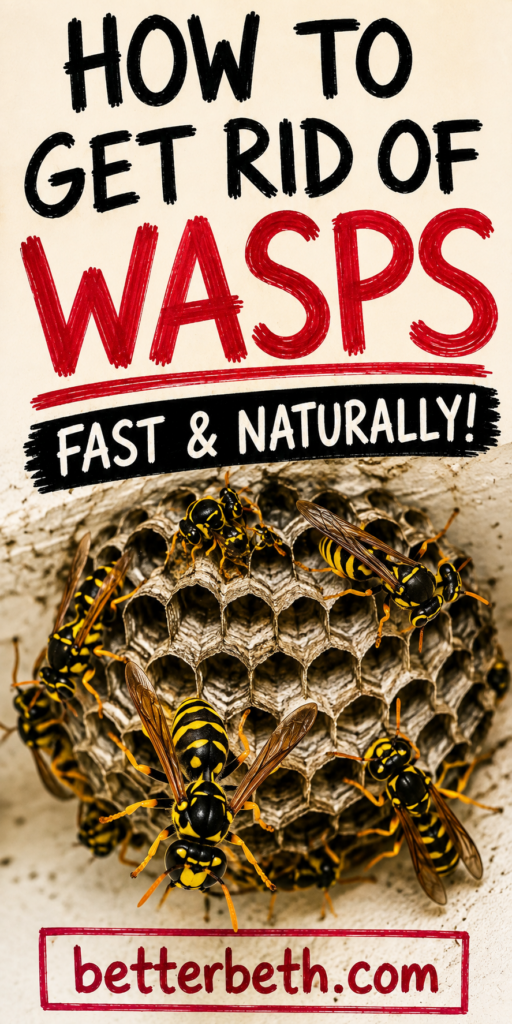
A visible nest can be much more dangerous than a few individual wasps. If the nest is large, close to a doorway or living area, inside a wall or roof, or located somewhere difficult to reach, professional pest control is the safer option. People with known severe insect-sting allergies should take extra precautions and avoid attempting nest removal.
How to Keep Wasps Away Long Term
The most effective approach is prevention: keep food and rubbish covered, clean outdoor eating areas, remove standing water, maintain screens, and inspect sheltered areas around the house before a small wasp problem becomes a larger one.
Bottom line: You do not need to rely on harsh chemicals to make your yard less attractive to wasps. Removing food and water sources, improving sanitation, and sealing suitable entry points can make a noticeable difference. For an active or difficult-to-reach nest, however, leave the removal to a professional.
Quick Wasp Prevention Checklist
- Keep food, drinks, and ripe fruit covered outdoors.
- Use tightly sealed trash and recycling containers.
- Clean sticky spills and barbecue residue quickly.
- Remove unnecessary standing water around the yard.
- Repair damaged screens and seal suitable small gaps.
- Inspect sheltered areas from a safe distance.
- Never disturb an active nest if you are unsure how to handle it safely.
Frequently Asked Questions
What attracts wasps to a house?
Food, sugary drinks, ripe fruit, garbage, protein-rich scraps, and accessible water can all attract foraging wasps. Removing these attractants is one of the simplest ways to reduce activity.
How can I keep wasps away naturally?
Start with prevention: remove food and water sources, keep outdoor areas clean, and make potential entry points less accessible. Natural scents and plants may help in some areas, but they should not be treated as a guaranteed repellent.
Should I remove a wasp nest myself?
If there is an active nest, especially one near a doorway, inside a wall or roof, or in a hard-to-reach location, professional removal is the safer choice. Do not block or disturb a nest just to see whether the wasps leave.
Save this guide for later if wasps are becoming a problem around your home or garden.