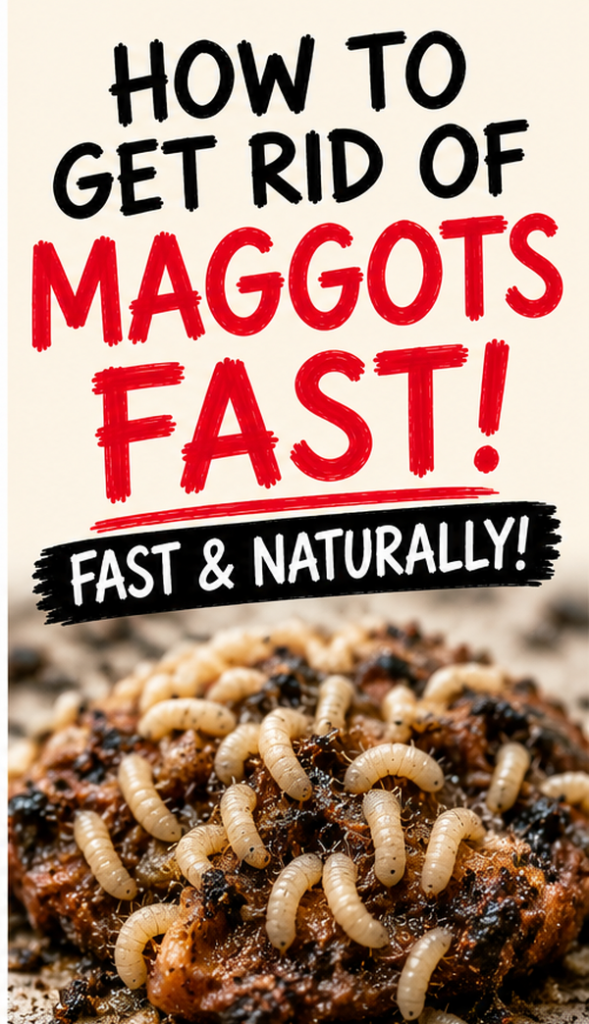
Finding maggots in or around your home can be disgusting and alarming. These small white larvae are usually a sign that flies have found a suitable place to lay eggs, often in decomposing food, garbage, animal waste, or another source of organic material.
The good news is that the problem can usually be handled by removing the source, cleaning the area thoroughly, and making sure flies cannot easily return.
1. Find the Source
Do not focus only on the maggots you can see. Look for the material attracting flies. Check garbage bags, the bottom of trash cans, spoiled food, compost, pet-waste areas, and other damp organic material.
2. Remove the Infested Material
Put contaminated food or waste into a sturdy, tightly closed bag. If possible, move it outside immediately. Avoid leaving an open bag indoors while you clean because adult flies may continue to access the material.
3. Empty and Wash the Trash Can
After removing the garbage, wash the inside and outside of the bin thoroughly with hot soapy water. Pay attention to the bottom, lid, handles, and any cracks where liquid or food residue may have collected.
4. Clean the Surrounding Area
Maggots can leave the original food source and crawl into nearby cracks or protected areas. Clean floors, walls, shelves, and surfaces around the infestation. Remove any organic residue you find.
5. Deal With Odors
Persistent odors can indicate that the source has not been completely removed. Check behind appliances, under cabinets, inside bins, and around drains if the smell continues. A hidden source may be attracting more flies.
6. Keep New Flies Away
Close doors and windows when practical, repair damaged screens, and keep food and garbage covered. Reducing the number of adult flies that can reach the cleaned area helps prevent another generation.
7. Clean Pet and Outdoor Waste Promptly
Pet waste and other organic material outdoors can also attract flies. Clean it up regularly and keep garbage containers tightly closed. If the infestation is outside, inspect shaded and protected areas where organic material may have accumulated.
8. Wash Fabrics and Clean Hidden Areas
If the source involved spilled food or waste near rugs, mats, or washable fabrics, clean them thoroughly. Move appliances or storage items when safe to do so and check underneath for hidden residue.
9. Prevent the Problem From Returning
Take out food waste regularly, rinse dirty containers before recycling, keep compost covered, clean trash bins periodically, and avoid leaving spoiled food exposed. Prevention is the easiest way to stop another maggot problem.
Why Do Maggots Suddenly Appear?
Maggots are fly larvae. When flies find a suitable food source, they can lay eggs there, and the eggs can hatch into larvae. Warm conditions can make the process happen quickly, which is why a trash can can seem fine one day and suddenly have larvae the next.
When Should You Call a Professional?
If you cannot locate the source, if there is a persistent foul odor, or if maggots keep returning after thorough cleaning, consider contacting a pest-control professional. A professional can help locate hidden organic material or another source of the infestation.
Frequently Asked Questions
What kills maggots quickly?
The first priority is removing and safely disposing of the material where they are developing. Thorough cleaning of the affected area is then essential. Avoid relying only on killing visible larvae while leaving the source untouched.
Can maggots come from a clean trash can?
They need a suitable food source, so a genuinely clean and dry trash can is much less attractive. However, small amounts of organic residue or liquid at the bottom of a bin can be enough to attract flies.
How do I stop maggots from coming back?
Remove food waste regularly, keep bins closed, clean spills, wash garbage containers, cover compost, and prevent flies from reaching organic material.
Bottom line: The fastest way to get rid of maggots is to remove what is feeding them. Dispose of the infested material, clean the container and surrounding area thoroughly, and then make the space less attractive to flies.